** FOR YEAR 11 STUDENTS & PARENTS **
Don’t let Year 11 become a last-minute panic.
Give your child a clear, practical GCSE revision system—so they know what to do each week, where to focus, and how to turn revision into marks on the paper.
Most Year 11 students do not need more pressure. They need a plan they can actually follow.
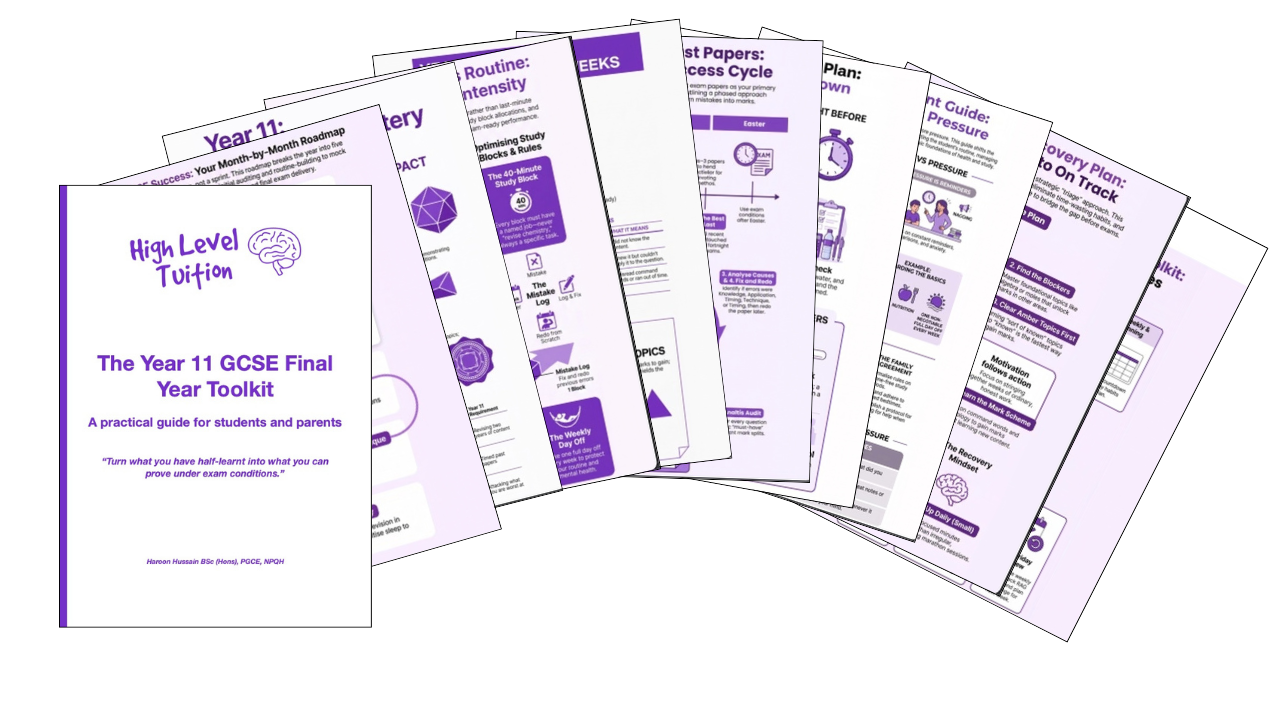
The Year 11 GCSE Final Year Toolkit helps students identify their gaps, prioritise what matters, use past papers properly and build a steady routine from now until their final exams.
Practical. Parent-friendly. Built for real Year 11 life—not unrealistic 12-hour revision timetables.
Know what to revise
Turn mistakes into marks
Stay calm and consistent
Don’t let Year 11 become a last-minute panic.
Practical. Parent-friendly. Built for real Year 11 life—not unrealistic 12-hour revision timetables.
Give your child a clear, practical GCSE revision system—so they know what to do each week, where to focus, and how to turn revision into marks on the paper.
Most Year 11 students do not need more pressure. They need a plan they can actually follow.
The Year 11 GCSE Final Year Toolkit helps students identify their gaps, prioritise what matters, use past papers properly and build a steady routine from now until their final exams.
Know what to revise
Turn mistakes into marks
Stay calm and consistent

Created by Haroon Hussain, BSc (Hons), PGCE, NPQH — Specialist GCSE Chemistry educator and programme designer.
Designed for real students, real mock results and real exam pressure.
Built for the real exam, not the hype
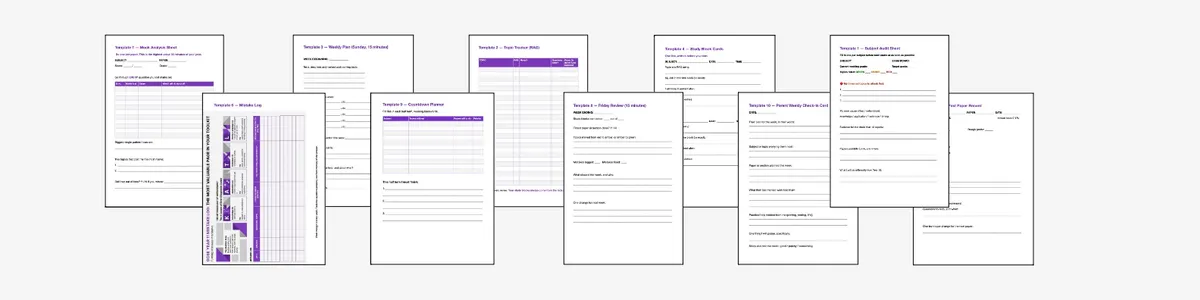
PRINTABLE TEMPLATES - INCLUDED WITH THE TOOLKIT
Created by Haroon Hussain, BSc (Hons), PGCE, NPQH — Specialist GCSE Chemistry educator and programme designer.
Designed for real students, real mock results and real exam pressure.
Built for the real exam, not the hype
PRINTABLE TEMPLATES - INCLUDED WITH THE TOOLKIT
The Problem
Your child may be working hard —without moving forward.
Year 11 creates a problem students have never had to solve before.
They are still learning new material in lessons, while needing to remember and improve everything from Year 9 and Year 10. Mocks arrive quickly. Sixth-form applications add pressure. And suddenly "I'll revise before the test" is no longer enough.
This is when many capable students start to drift.
Does any of this sound familiar?
The issue is rarely a lack of intelligence or effort.
The real issue is that most students have never been shown how to run their Year 11 properly.
They need a system that tells them what to work on, how to practise it, how to learn from mistakes and what to do next when a week does not go to plan.
They revise for hours but cannot remember it in a test.
They make neat notes, flashcards or posters—but marks stay the same.
They say, “I don’t know where to start.”
They keep revising the topics they already like because the difficult ones feel overwhelming.
They understand work in class but struggle when questions are unfamiliar or timed.
A low mock score knocks their confidence and leads to panic, avoidance or arguments at home.
You want to help—but you do not want every conversation to turn into “Have you revised?”
The Toolkit
Meet the Year 11 GCSE Final Year Toolkit
A practical roadmap for turning what your child has half-learnt into what they can prove under exam conditions.
This is not another generic "revision tips" booklet.
It is a step-by-step Year 11 operating system that shows students how to:
Work out exactly where they are now.
Build a realistic weekly revision routine around school, homework and life.
Understand why marks are lost—and fix the real cause.
Maintain progress through to the final exams without burning out.
The goal is not for your child to revise every spare minute.
The goal is for them to do the right work, consistently, for long enough that it compounds.
They make neat notes, flashcards or posters—but marks stay the same.
Work out exactly where they are now.
Stay composed after a disappointing mock rather than giving up.
The Toolkit
Meet the Year 11 GCSE Final Year Toolkit
A practical roadmap for turning what your child has half-learnt into what they can prove under exam conditions.
This is not another generic "revision tips" booklet.
It is a step-by-step Year 11 operating system that shows students how to:
Work out exactly where they are now.
Build a realistic weekly revision routine around school, homework and life.
Understand why marks are lost—and fix the real cause.
Maintain progress through to the final exams without burning out.
They make neat notes, flashcards or posters—but marks stay the same.
Work out exactly where they are now.
Stay composed after a disappointing mock rather than giving up.
The goal is not for your child to revise every spare minute.
The goal is for them to do the right work, consistently, for long enough that it compounds.
What's Inside
Everything they need to take control of Year 11
1. The Year 11 Audit
Before revising randomly, students identify where they stand in every subject.
They will learn how to:
Find their exam specification and use it as a master checklist.
Set a realistic current grade, target grade and priority gap.
Rate every topic using the Red–Amber–Green system.
Identify whether marks are being lost through knowledge, application, technique or timing.
Target the areas that can produce the biggest improvement first.
The result: no more vague “I need to revise everything” panic.
The result: no more vague “I need to revise everything” panic.
2. A Weekly Revision System
Students do not need an impossible colour-coded timetable. They need a simple rhythm they can repeat.
The toolkit gives them a structure built around:
A 15-minute Sunday plan.
Short same-day consolidation after important lessons.
Four or five focused study blocks with a specific job.
One timed paper or paper section every week.
A 15-minute Friday review and reset.
One genuine day off each week.
The result: revision becomes a normal part of the week, rather than a source of daily arguments and last-minute stress.
3. The Red–Amber–Green Topic Tracker
Most students waste time revising what already feels comfortable.
The toolkit helps them focus on:
Red: topics they do not know or cannot answer questions on.
Amber: topics they partly understand but would still lose marks on.
Green: topics they can genuinely answer under exam conditions.
The result: their time goes where it can make the most difference.
4. The Past-Paper Method
Past papers are among the most valuable revision tools available—but only if students use them properly.
Students are shown how to:
Complete questions timed and closed book.
Mark strictly with the official mark scheme.
Diagnose every lost mark.
Relearn, practise and redo errors from scratch.
The result: papers become lessons, not just scores.
5. The Mistake Log
A wrong answer is not wasted effort if students know what to do with it.
The Mistake Log helps students identify whether an error came from:
A missing piece of knowledge
Difficulty applying knowledge to an unfamiliar question
Weak exam technique, such as missing a command word
Poor timing or rushing
The result: they stop repeating the same avoidable mistakes in every test.
6. The Mock-Results Recovery Plan
Mocks can feel like a judgement. They are not.
The toolkit shows students and parents how to turn a mock result into useful information:
Which topics cost the most marks?
What type of error appeared most often?
What needs to change this week
Which questions should be redone later?
The result: a disappointing result leads to a better plan—not a confidence crash.
7. The Parent Guide
Your role matters in Year 11—but it is easy for good intentions to become pressure.
The Parent Guide gives you a calm, practical way to help without becoming the revision police.
You will learn how to:
Protect an agreed routine at home.
Help remove friction by printing papers, creating a quiet space and keeping practical plans clear.
Run a simple 15-minute weekly check-in.
Ask questions that help your child think, rather than shut down.
Respond constructively to low results.
Protect sleep, food, movement and rest as part of the revision plan.
The result: more support, less conflict.
8. Printable planning tools
The toolkit includes practical templates students can use immediately:
Subject Audit Sheet
Red–Amber–Green Topic Tracker
Weekly Revision Plan
Study Block Cards
Same-Day Consolidation
Mistake Log
Past-Paper Record
Mock Analysis Sheet
Friday Review
Countdown Planner
Parent Weekly Check-In Card
Plus: The 10 Rules on one page
The result: students do not just understand what to do—they have the tools to put it into action.
What's Inside
Everything they need to take control of Year 11
1. The Year 11 Audit
Before revising randomly, students identify where they stand in every subject.
They will learn how to:
Find their exam specification and use it as a master checklist.
Set a realistic current grade, target grade and priority gap.
Rate every topic using the Red–Amber–Green system.
Identify whether marks are being lost through knowledge, application, technique or timing.
Target the areas that can produce the biggest improvement first.
The result: no more vague “I need to revise everything” panic.
The result: no more vague “I need to revise everything” panic.
2. A Weekly Revision System
Students do not need an impossible colour-coded timetable. They need a simple rhythm they can repeat.
The toolkit gives them a structure built around:
A 15-minute Sunday plan.
Short same-day consolidation after important lessons.
Four or five focused study blocks with a specific job.
One timed paper or paper section every week.
A 15-minute Friday review and reset.
One genuine day off each week.
The result: revision becomes a normal part of the week, rather than a source of daily arguments and last-minute stress.
3. The Red–Amber–Green Topic Tracker
Most students waste time revising what already feels comfortable.
The toolkit helps them focus on:
Red: topics they do not know or cannot answer questions on.
Amber: topics they partly understand but would still lose marks on.
Green: topics they can genuinely answer under exam conditions.
The result: their time goes where it can make the most difference.
4. The Past-Paper Method
Past papers are among the most valuable revision tools available—but only if students use them properly.
Students are shown how to:
Complete questions timed and closed book.
Mark strictly with the official mark scheme.
Diagnose every lost mark.
Relearn, practise and redo errors from scratch.
The result: papers become lessons, not just scores.
5. The Mistake Log
A wrong answer is not wasted effort if students know what to do with it.
The Mistake Log helps students identify whether an error came from:
A missing piece of knowledge
Difficulty applying knowledge to an unfamiliar question
Weak exam technique, such as missing a command word
Poor timing or rushing
The result: they stop repeating the same avoidable mistakes in every test.
6. The Mock-Results Recovery Plan
Mocks can feel like a judgement. They are not.
The toolkit shows students and parents how to turn a mock result into useful information:
Which topics cost the most marks?
What type of error appeared most often?
What needs to change this week
Which questions should be redone later?
The result: a disappointing result leads to a better plan—not a confidence crash.
7. The Parent Guide
Your role matters in Year 11—but it is easy for good intentions to become pressure.
The Parent Guide gives you a calm, practical way to help without becoming the revision police.
You will learn how to:
Protect an agreed routine at home.
Help remove friction by printing papers, creating a quiet space and keeping practical plans clear.
Run a simple 15-minute weekly check-in.
Ask questions that help your child think, rather than shut down.
Respond constructively to low results.
Protect sleep, food, movement and rest as part of the revision plan.
The result: more support, less conflict.
8. Printable planning tools
The toolkit includes practical templates students can use immediately:
Subject Audit Sheet
Red–Amber–Green Topic Tracker
Weekly Revision Plan
Study Block Cards
Same-Day Consolidation
Mistake Log
Past-Paper Record
Mock Analysis Sheet
Friday Review
Countdown Planner
Parent Weekly Check-In Card
Plus The 10 Rules on one page
The result: students do not just understand what to do—they have the tools to put it into action.
What's Inside
Everything they need to take control of Year 11
1. The Year 11 Audit
Before revising randomly, students identify where they stand in every subject.
They will learn how to:
Find their exam specification and use it as a master checklist.
Set a realistic current grade, target grade and priority gap.
Rate every topic using the Red–Amber–Green system.
Identify whether marks are being lost through knowledge, application, technique or timing.
Target the areas that can produce the biggest improvement first.
The result: no more vague “I need to revise everything” panic.
The result: no more vague “I need to revise everything” panic.
2. A Weekly Revision System
Students do not need an impossible colour-coded timetable. They need a simple rhythm they can repeat.
The toolkit gives them a structure built around:
A 15-minute Sunday plan.
Short same-day consolidation after important lessons.
Four or five focused study blocks with a specific job.
One timed paper or paper section every week.
A 15-minute Friday review and reset.
One genuine day off each week.
The result: revision becomes a normal part of the week, rather than a source of daily arguments and last-minute stress.
3. The Red–Amber–Green Topic Tracker
Most students waste time revising what already feels comfortable.
The toolkit helps them focus on:
Red: topics they do not know or cannot answer questions on.
Amber: topics they partly understand but would still lose marks on.
Green: topics they can genuinely answer under exam conditions.
The result: their time goes where it can make the most difference.
4. The Past-Paper Method
Past papers are among the most valuable revision tools available—but only if students use them properly.
Students are shown how to:
Complete questions timed and closed book.
Mark strictly with the official mark scheme.
Diagnose every lost mark.
Relearn, practise and redo errors from scratch.
The result: papers become lessons, not just scores.
5. The Mistake Log
A wrong answer is not wasted effort if students know what to do with it.
The Mistake Log helps students identify whether an error came from:
A missing piece of knowledge
Difficulty applying knowledge to an unfamiliar question
Weak exam technique, such as missing a command word
Poor timing or rushing
The result: they stop repeating the same avoidable mistakes in every test.
6. The Mock-Results Recovery Plan
Mocks can feel like a judgement. They are not.
The toolkit shows students and parents how to turn a mock result into useful information:
Which topics cost the most marks?
What type of error appeared most often?
What needs to change this week
Which questions should be redone later?
The result: a disappointing result leads to a better plan—not a confidence crash.
7. The Parent Guide
Your role matters in Year 11—but it is easy for good intentions to become pressure.
The Parent Guide gives you a calm, practical way to help without becoming the revision police.
You will learn how to:
Protect an agreed routine at home.
Help remove friction by printing papers, creating a quiet space and keeping practical plans clear.
Run a simple 15-minute weekly check-in.
Ask questions that help your child think, rather than shut down.
Respond constructively to low results.
Protect sleep, food, movement and rest as part of the revision plan.
The result: more support, less conflict.
8. Printable planning tools
The toolkit includes practical templates students can use immediately:
Subject Audit Sheet
Red–Amber–Green Topic Tracker
Weekly Revision Plan
Study Block Cards
Same-Day Consolidation
Mistake Log
Past-Paper Record
Mock Analysis Sheet
Friday Review
Countdown Planner
Parent Weekly Check-In Card
Plus: The 10 Rules on one page
The result: students do not just understand what to do—they have the tools to put it into action.
A simple system your child can start this week
Step 1: Audit
They complete the Subject Audit Sheet, review old tests and identify their Red, Amber and Green topics.
Step 2: Prioritise
They stop trying to fix every subject and every topic at once. Instead, they choose the most important gaps and blockers.
Step 3: Plan
They spend 15 minutes on Sunday assigning a specific task to each study block.
Not "revise science."
TASKS SUCH AS
"Complete six rates-of-reaction exam questions, mark them, and log the three errors I made."
Step 4: Practise
They complete one timed paper or paper section each week, mark it honestly and identify why marks were lost.
Step 5: Review and reset
They spend 15 minutes on Friday checking what worked, fixing mistakes and creating a better plan for the following week.
A good Year 11 is not built in one perfect week.
It is built by repeating ordinary, focused actions for long enough.
For Parents
You do not need to know GCSE Chemistry—or any subject—to make a real difference.
Parents often feel caught between two unhelpful options:
Say nothing and worry that their child is drifting.
Keep asking about revision and create tension at home.
There is a better approach.
The toolkit helps you move from reminding and monitoring to calm, practical support.
INSTEAD OF ASKING
"Have you revised?"
↓ YOU CAN ASK
"What is the plan for your study blocks this week?"
INSTEAD OF REACTING TO A LOW MOCK GRADE WITH PANIC, YOU CAN ASK
"What did the paper tell us, and what will you change?"
Instead of measuring effort by how long they sit at a desk, you can help them check whether they can answer questions without notes.
The Parent Guide provides the structure. You provide the calm, belief and practical help.
If They Are Behind
Already feel behind? Start here.
If Year 10 did not go as planned, or the audit reveals more gaps than expected, this toolkit gives students a recovery process.
They do noT need to
Relearn every GCSE topic immediately.
Work 30 hours every week.
Become a completely different person overnight.
Wait until they “feel motivated.”
Compare themselves to friends who seem more organised.
They need to
Choose the two subjects that matter most.
Fix the foundational topics that unlock later work.
Turn quick-win amber topics into secure marks.
Learn the exam technique that can improve performance quickly.
Do small, focused sessions consistently.
Being behind in September, October or November is fixable.
Waiting until Easter makes everything harder.
START WHILE THE WORK IS STILL MANAGEABLE
The 10 Rules
The Year 11 rules that keep revision on track
Audit first—do not revise blindly.
Give every study block one exact job.
Mark strictly against the mark scheme.
Log mistakes, fix them, then redo them later from scratch.
If stuck for three days, ask for help that week.
Study Red and Amber topics, not the Green ones.
Complete one timed paper or section every week.
Identify whether every lost mark came from knowledge, application, technique or timing.
Treat mocks as information, not judgement.
Protect one full day off every week.
Start this week
Year 11 is too important to leave to chance.
Your child does not need a perfect timetable, endless revision hours or constant pressure.
They need a system that helps them see the next step clearly—and keep taking it.
The Year 11 GCSE Final Year Toolkit gives students and parents the structure to move from uncertainty and panic to focused action, steady progress and greater confidence.
Start this week. Build the habits that carry them through to the final exams.
What happens after you buy
1. Instant access. Your Quick Start page, toolkit download and a short welcome video from Haroon.
2. Your first step today. Your child completes the Subject Audit Sheet and rates their topics Red, Amber or Green.
3. Guided Implementation Emails. Short emails take you through Audit → Prioritise → Plan → Practise → Review. After that, a weekly Sunday planning email and seasonal emails for mocks, Easter and exam season.
Only
£30
Year 11 GCSE Final Year Toolkit
£30 · one-off payment · instant digital access
Frequently asked questions
Is this only for high-achieving students?
No. It is designed for any Year 11 student who wants a clearer plan. It is particularly useful for students who feel overwhelmed, do not know where to begin, work hard without seeing results, or want to move from their current grade towards a more ambitious target.
Is this subject-specific?
The system works across all GCSE subjects.
My child is already behind—will it still help?
Yes. The toolkit includes a specific recovery plan for students who are behind. It focuses on prioritising subjects, identifying foundational “blocker” topics, securing quick-win areas and building momentum through manageable daily work.
How much time does it require?
The toolkit recommends a realistic autumn-term structure of around five to seven hours of independent study per week outside homework, split into short, focused blocks. It is designed to grow steadily as exams approach, rather than relying on exhausting revision marathons.
Does it guarantee a grade?
No. It gives your child a clear structure for planning, practising and learning from mistakes. Results depend on how consistently it's used, their starting point and the subject support they get.
What if my child does not like being told what to do?
The toolkit is built to increase ownership. It gives students a way to make their own decisions based on evidence: their weak topics, past-paper results, error patterns and upcoming deadlines. The parent role is to support the routine and ask constructive questions—not control every study session.
Will my child still need a tutor?
Many won't. Most Year 11 problems come from not having a system, and that affects every subject. Use the toolkit consistently for four to six weeks. If one subject is still not improving, the Mistake Log will show you why, and that's the time to consider focused help. If that subject is AQA Higher Chemistry, that's what I teach.
What happens after purchase?
They receive immediate access to the toolkit and can begin with the Subject Audit Sheet. The best first action is to identify Red, Amber and Green topics, then plan the first week of focused study blocks. You will get access to my quick start which will give a map on how to actually start implementing the tools along with a series of guided implementation emails so you can make good progress.
Where this fits
Part of a four-stage system:
Year 9 choose and practise → Year 10 build the habits → Year 11 run the system → Year 12 run it independently.

This site is not a part of the Facebook website or Facebook Inc. Additionally, This site is NOT endorsed by Facebook in any way. FACEBOOK is a trademark of FACEBOOK, Inc.
Important: Legal Disclaimers
Results depend on how consistently the toolkit is used. We don't promise specific grades, but we do promise a clear, practical plan and honest guidance.
© Copyright 2026 - High Level Tuition - All Rights Reserved
Terms of Use | Privacy Policy | Support: [email protected]